Why start home composting
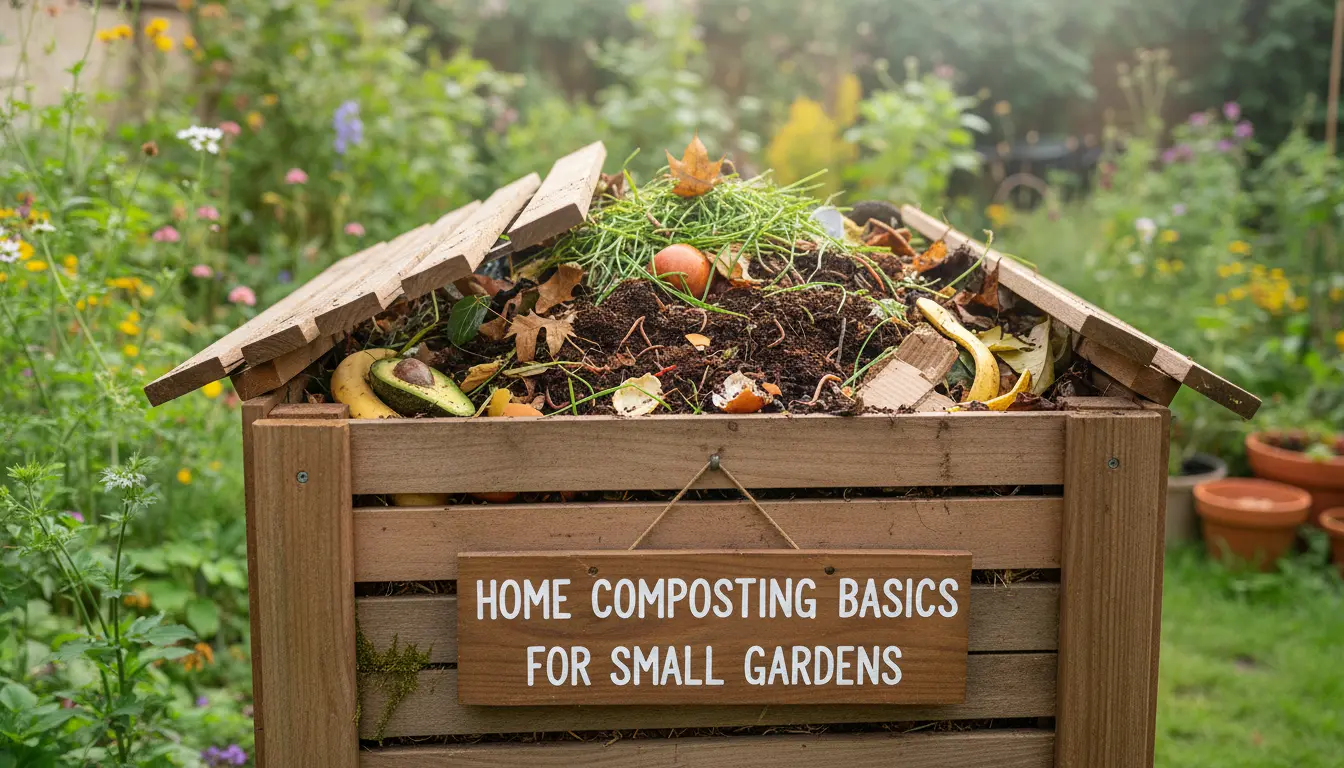
Home composting reduces kitchen and garden waste while producing nutrient-rich soil. It lowers trash volume and supports healthier plants without chemical fertilizers.
This guide covers practical steps for home composting for beginners, with clear materials, methods, and troubleshooting tips you can use right away.
Basic principles of home composting
Composting converts organic matter into stable humus through decomposition by microbes. The main inputs are carbon-rich “browns” and nitrogen-rich “greens.” Proper balance, moisture, and aeration speed up the process.
Key components for composting
- Browns: dry leaves, cardboard, paper, straw (carbon).
- Greens: vegetable scraps, coffee grounds, grass clippings (nitrogen).
- Air: oxygen supports aerobic microbes; turn the pile periodically.
- Water: keeps microbes active; pile should feel like a wrung-out sponge.
Choosing a compost method
There are several suitable methods for beginners depending on space and time. Pick one that matches your lifestyle and available materials.
Common home composting systems
- Open pile: Good for large yards and frequent turning.
- Compost bin: Enclosed and tidy; helps retain heat and moisture.
- Tumbler: Easy to turn and faster decomposition in small spaces.
- Vermicomposting: Uses worms to break down food waste indoors or in a shady spot.
Step-by-step composting process
Follow these practical steps to build and maintain a healthy compost pile.
- Pick a location with partial shade and good drainage.
- Layer a base of coarse browns for airflow.
- Add a mix of greens and browns; aim for roughly 2–3 parts browns to 1 part greens by volume.
- Keep the pile moist but not soggy; water if dry and cover if too wet.
- Turn the pile every 1–2 weeks to add oxygen and speed heating.
- Harvest finished compost when it’s dark, crumbly, and smells earthy (usually 2–6 months).
Quick tips for beginners
- Chop or shred materials to increase surface area.
- Avoid meat, dairy, oils, and diseased plants to prevent pests and odors.
- Use a thermometer if you want to monitor heat; 130–150°F indicates active decomposition for hot composting.
Adding a thin layer of garden soil or finished compost when building a new pile introduces beneficial microbes that speed breakdown.
Common problems and solutions
Beginners often face a few predictable issues. Most have simple fixes.
Problem: Pile smells bad
Cause: Too much green material or poor aeration creates anaerobic conditions. Solution: Turn the pile and add more browns like dry leaves or shredded paper.
Problem: Pile is dry and slow

Cause: Lack of moisture. Solution: Water the pile to maintain dampness, and add greens to boost microbial activity.
Problem: Pests or rodents
Cause: Food scraps like meat or oily foods. Solution: Stop adding those items and use a secure bin or tumbler. Bury food scraps within the pile to deter animals.
Using your finished compost
Finished compost is versatile and safe to use in many garden tasks. Incorporate it into soil or use as a top dressing.
Ways to apply compost
- Mix 1–3 inches into garden beds to improve structure and fertility.
- Top-dress lawns with a thin layer in spring or fall.
- Use as potting mix amendment for containers and seedlings.
Small real-world example
Case study: A two-person household started a 50-gallon tumbler using kitchen scraps and shredded cardboard. They kept the tumbler in a shaded corner and turned it twice weekly.
Within eight weeks the compost was dark and crumbly. They used it to top-dress potted herbs and reported healthier growth and reduced fertilizer purchases over a season.
Materials checklist for beginners
Keep this short checklist by your kitchen to make composting habit-based and simple.
- Compost bin or tumbler
- Kitchen scraps container with lid
- Shredder or scissors for browns
- Garden fork for turning
- Optional: compost thermometer and finished compost bag
Final advice for composting for beginners
Start small and build confidence. Consistency with adding mixed materials and periodic turning is more important than perfection.
Track progress over weeks and adjust moisture, airflow, and material balance as needed. Composting is forgiving and gets easier with practice.
If you follow these steps, you’ll reduce waste, improve soil, and enjoy a simple, sustainable practice at home.