Composting at home turns kitchen scraps and yard waste into valuable soil material. This guide gives practical steps to start composting at home, select the right container, balance materials, and troubleshoot common problems.
Why composting at home matters
Composting reduces household waste and lowers methane from landfills. It also returns nutrients to gardens, improving soil structure and plant health.
Many cities now encourage home composting to meet waste reduction goals. Starting composting at home is inexpensive and scalable for apartments or houses.
Choose the right system for composting at home
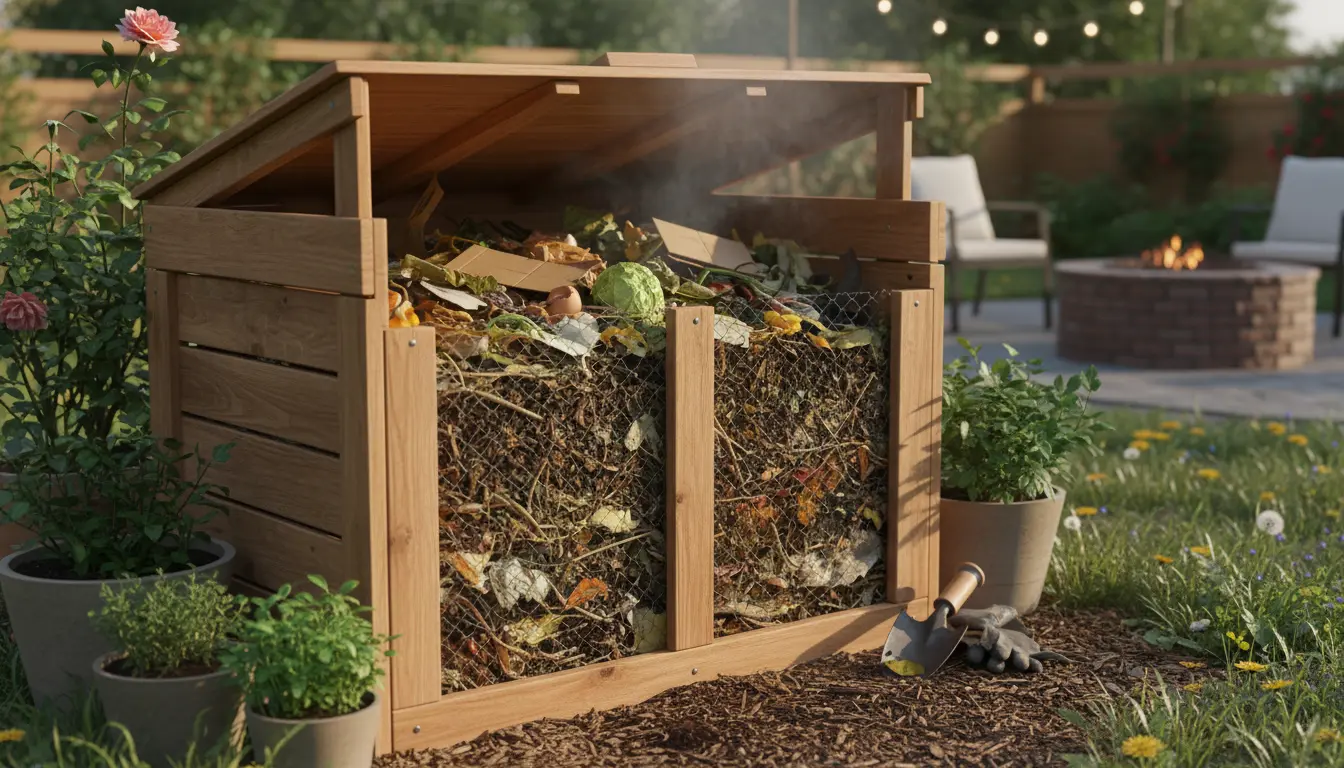
Your space, climate, and the quantity of waste determine the best system. Common options include a simple pile, a tumbling composter, or an indoor bokashi bin.
- Backyard pile: Low cost, easy for yards with space.
- Compost bin: Keeps a tidy area and helps retain heat.
- Tumbler: Speeds up decomposition with regular turning.
- Bokashi or worm bin: Good for apartments and indoor composting.
What to compost at home
Knowing what to add speeds decomposition and prevents pests. Aim for a mix of “greens” and “browns.”
Greens (nitrogen rich)
- Vegetable and fruit scraps
- Fresh grass clippings
- Coffee grounds and tea leaves
Browns (carbon rich)
- Dry leaves and twigs
- Shredded paper or cardboard
- Straw and sawdust (in moderation)
Items to avoid when composting at home
- Meat, fish, and dairy (attract pests)
- Oily foods and pet waste
- Diseased plants or invasive weeds
How to start composting at home: step-by-step
Follow this simple routine to get a working compost system quickly. These steps work for most backyard bins and many indoor setups.
- Pick a location. Choose a level, shaded spot with good drainage. For indoor bins, keep near the kitchen but with some ventilation.
- Layer your materials. Start with a thin layer of coarse browns like small branches for airflow. Alternate greens and browns in layers about 2–4 inches thick.
- Maintain moisture. Keep the pile damp like a wrung-out sponge. Water if it dries out, or add dry browns if it becomes too wet.
- Turn regularly. Aerate by turning the pile every 1–2 weeks. Tumblers make this easier; manual piles benefit from a pitchfork turn.
- Monitor temperature and time. A well-balanced pile heats to 120–160°F (49–71°C). Compost can be ready in 2–6 months depending on conditions.
Troubleshooting composting at home
Common issues are easy to fix when you know the signs. Small adjustments usually restore balance.
Problem: Smelly compost
Cause: Too much moisture or too many greens. Solution: Add dry browns, turn the pile, and ensure drainage.
Problem: Slow decomposition

Cause: Not enough nitrogen or poor aeration. Solution: Add fresh greens, chop materials into smaller pieces, and increase turning.
Problem: Pests
Cause: Meat, dairy, or exposed food scraps. Solution: Bury food under browns, use a closed bin, or switch to bokashi for indoor food waste.
Composting can cut household waste by up to 30 percent and reduce greenhouse gas emissions from landfills.
Using finished compost from home
Finished compost looks dark, crumbly, and earthy. Use it to improve soil, as mulch, or mixed into potting mixes.
- Top-dress garden beds with 1–2 inches of compost.
- Mix compost into planting holes to boost nutrient content.
- Combine with potting soil at 10–30 percent for container plants.
Small case study: A household that started composting at home
Sarah, a homeowner with a small garden, started a 50-gallon tumbling composter. She saved vegetable scraps and shredded leaves for browns.
Within three months she had dark crumbly compost. Her tomato plants produced larger fruit, and she cut weekly trash by about 25 percent.
Key takeaways: mixing materials, regular turning, and monitoring moisture made composting at home simple and effective.
Practical tips for successful composting at home
- Chop large scraps to speed breakdown.
- Keep a small kitchen caddy for scraps to reduce trips outside.
- Use a compost thermometer for large piles to track heat.
- Layer in small amounts of soil occasionally to add microbes.
Composting at home is a low-cost way to turn waste into a resource. With basic tools and a routine, anyone can create compost that improves gardens and reduces trash. Start small, observe the system, and adjust as needed.