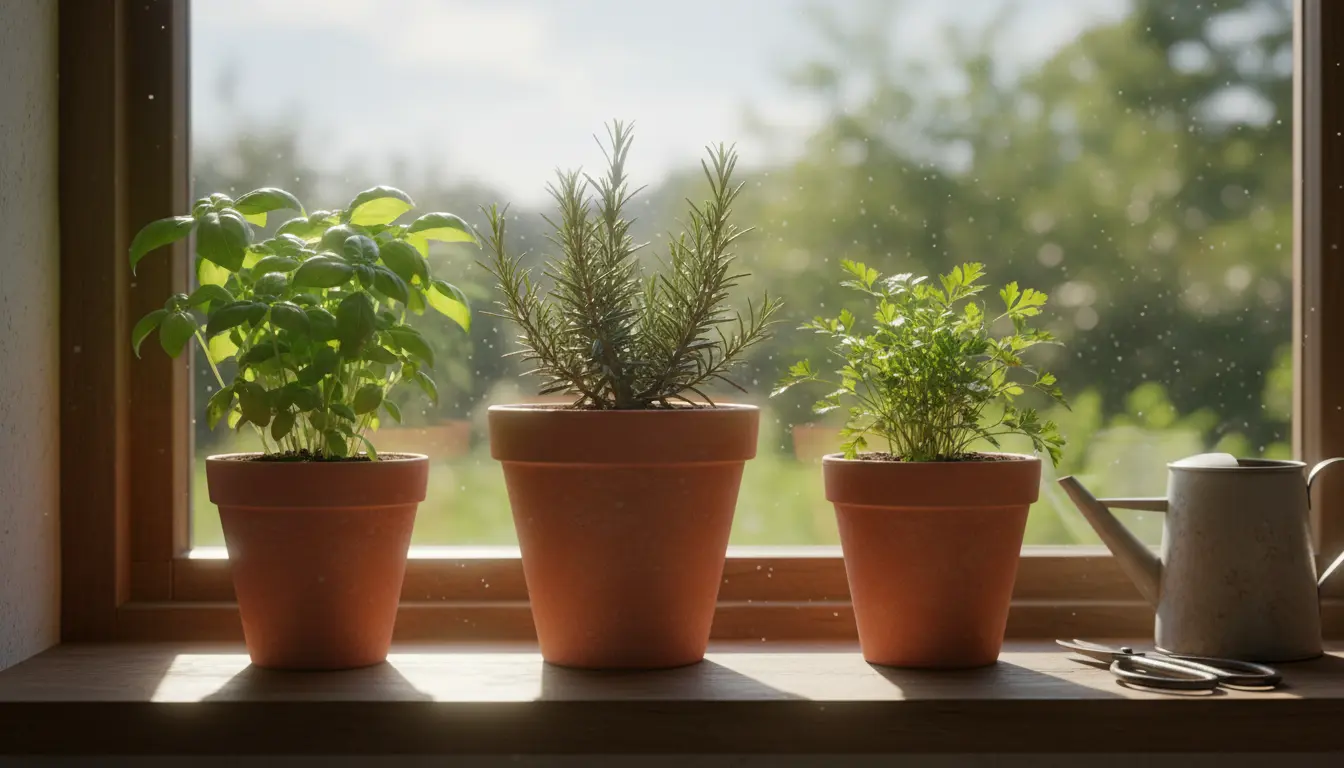
Why grow indoor herbs year round
Growing indoor herbs gives fresh flavors, saves money, and brightens a home. You can harvest small amounts daily and reduce trips to the store.
Choose the right herbs to grow indoors
Not all herbs thrive inside. Start with easy, reliable varieties to build confidence and steady yields.
- Basil — fast growth and frequent harvests.
- Parsley — tolerates lower light better than basil.
- Chives — compact and forgiving with trimming.
- Mint — vigorous grower; best in its own pot.
- Thyme and oregano — slow-growing and drought tolerant.
Light requirements for growing indoor herbs

Light is the most important factor when you grow indoor herbs. Aim for bright, indirect light for most herbs, and direct morning sun when possible.
Using windows and supplemental light
Place herbs near a south- or west-facing window when available. If natural light is limited, use LED grow lights to provide 12–16 hours of light each day.
Soil and containers for indoor herbs
Good soil and containers keep roots healthy. Use a well-draining potting mix designed for containers rather than garden soil.
- Choose pots with drainage holes to prevent root rot.
- Use 4–8 inch pots for most herbs; larger pots for basil and mint.
- Add perlite or sand to improve drainage if the mix feels heavy.
Watering and humidity tips

Indoor herbs need consistent but moderate moisture. Water when the top 1 inch of soil feels dry to the touch.
Overwatering causes yellow leaves and root rot. Underwatering makes leaves wilt and turn brown at the edges.
Easy watering checklist
- Check soil moisture twice a week.
- Water until excess drains from the pot; discard standing water.
- Group plants or use a pebble tray to raise humidity for Mediterranean herbs.
Feeding and fertilizing indoor herbs
Herbs in containers need nutrients because they use the limited soil quickly. Feed with a balanced liquid fertilizer every 3–4 weeks during active growth.

Reduce feeding in winter when growth slows. Too much nitrogen makes herbs leggy and weak-flavored.
Pruning and harvesting to encourage growth
Regular pruning keeps plants productive and bushy. Harvest leaves from the top and never take more than one-third of the plant at a time.
- Pinch back basil when it reaches 6–8 inches to promote branching.
- Harvest parsley and cilantro by cutting outer stems at the base.
- Remove flower spikes from herbs like basil and chives to keep flavor strong.
Pest control and common problems
Indoor pests are less common but can still appear. Watch for aphids, spider mites, and whiteflies.
Use a gentle approach: rinse leaves, apply insecticidal soap, and isolate affected plants. Good airflow reduces fungal issues.
Troubleshooting quick guide
- Yellow leaves: often overwatering or poor drainage.
- Leggy stems: not enough light; move to brighter spot or add grow light.
- Bitter or weak flavor: poor soil nutrients or overwatering.
Many herbs release stronger essential oils—and better flavor—when slightly stressed by moderate drying between waterings.
Seasonal care to grow indoor herbs year round
Adjust care with the seasons to keep herbs healthy all year. In winter, reduce watering and light exposure but maintain steady temperatures.
Rotate pots every week so plants grow evenly toward the light. Repot annually in fresh soil to replenish nutrients.
Small real-world example: Apartment basil success
Case study: Emma, a city renter, wanted fresh basil in winter. She used a south-facing sill, a 6-inch pot with well-draining mix, and an LED full-spectrum light on a timer.
She watered when the top inch dried and pinched back weekly. Within six weeks she had enough basil for weekly pesto and saved trips to the store.
Step-by-step starter plan to grow indoor herbs
- Choose 2–4 easy herbs like basil, parsley, chives, and thyme.
- Place pots in bright window or set up an LED grow light.
- Use quality potting mix and pots with drainage.
- Water when top 1 inch is dry; fertilize monthly in growth periods.
- Prune regularly and monitor for pests.
Final tips to keep herbs productive
Start small and expand as you gain experience. Keep a simple routine: light, water, feed, and prune.
With basic care and the right placement, you can grow indoor herbs year round and enjoy fresh flavors any season.