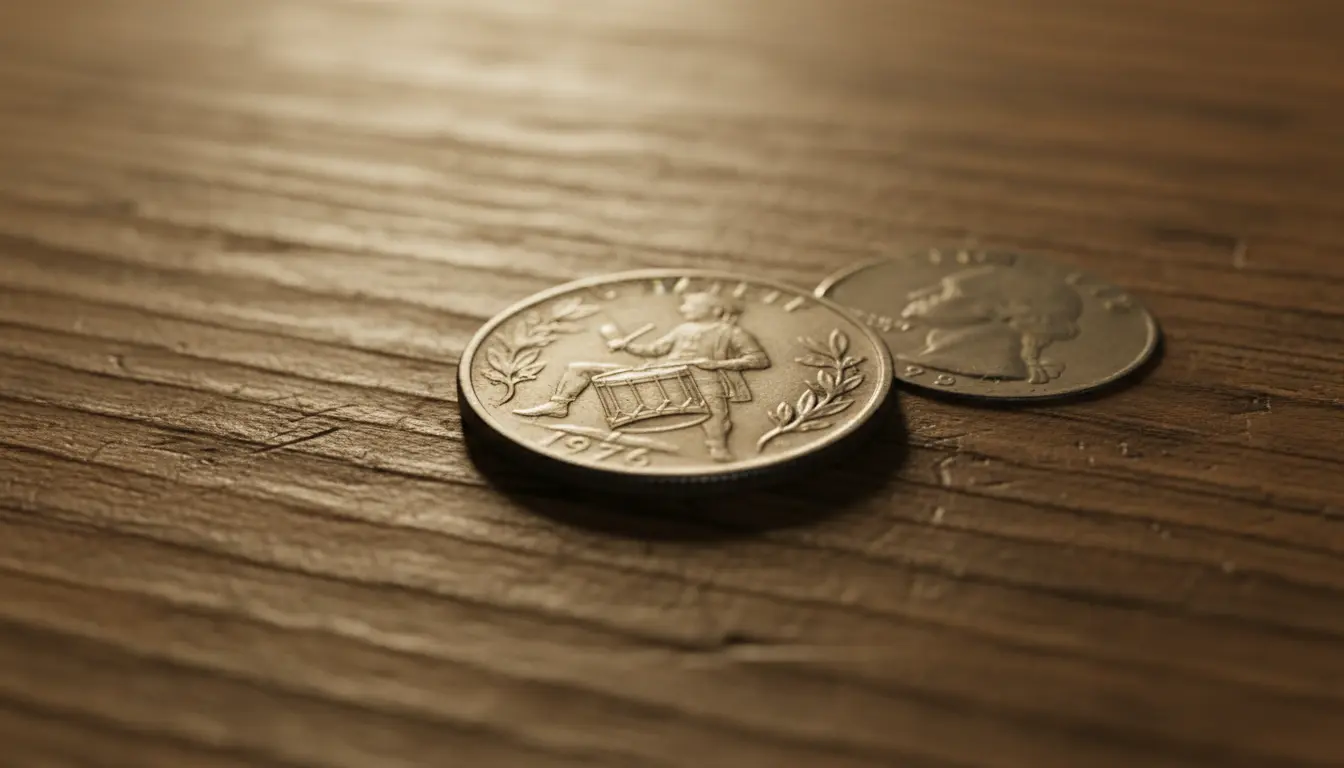
If you have a 1976 quarter in your pocket change, it pays to check it carefully. The Bicentennial quarter features a colonial drummer on the reverse and is widely collected. A tiny fraction of these coins show errors or rare characteristics that can dramatically increase value.
How to identify a 1976 Drummer Boy quarter
Check the date and reverse design
Look for the dual date 1776 1976 on the obverse and the drummer design on the reverse. That reverse was created for the U.S. Bicentennial and is often referred to as the Drummer Boy quarter.
Look for mint mark and composition
Identify the mint mark near the rim. In 1976, quarters were struck at Philadelphia (no mint mark), Denver (D), and San Francisco (S). Some proof and special collector strikes from San Francisco were produced on silver-clad planchets.
Spot unusual features and errors
Value often comes from errors or unusual manufacturing varieties. Common things to check:
- Doubling on the date or lettering (doubled die)
- Off-center strikes or clipped planchets
- Incorrect metal composition (silver-clad where not expected)
- Die breaks, cuds, or repunched mint marks
Why some 1976 Drummer Boy quarters can be valuable
Rarity of error or variety
Most 1976 quarters are common and worth face value or modest collector premiums. But certain errors or extremely rare varieties can attract high prices when verified and graded by major services.
Condition and grading
Condition is critical. A rare error in low grade will rarely reach top prices. Coins graded by third-party services such as PCGS or NGC with high numerical grades command the most interest.
Market and provenance
Provenance and auction history affect value. A coin with documented origin, professional photography, and bidding by reputable dealers can fetch substantially more than an unverified example.
Common errors and varieties to watch for
- Doubled die obverse or reverse — visible doubling of letters, date, or drum details
- Clear die breaks or cuds that change the rim or design elements
- Planchet errors — incorrect or laminated planchets, or trimmed planchets
- Overstrikes onto older planchets or mismatched metals
What to do if you find a potential rare 1976 Drummer Boy quarter
Immediate steps
Handle the coin carefully by the edges and avoid cleaning it. Cleaning can reduce value dramatically. Place the coin in a soft holder or flip and label its origin (date you found it, where).
Document and compare
Use a loupe or magnifying glass to photograph any anomalies. Compare those photos to reputable references online or in coin catalogs. Note mint marks, doubling patterns, and planchet irregularities.
Get professional opinions and grading
If the coin appears significant, seek opinions from experienced collectors or local coin dealers. For potential high-value finds, submit the coin to a reputable grading service (PCGS or NGC) for authentication and grading.
Selling and protecting value
Options for selling a verified rare coin include auction houses, specialist coin dealers, and major online auction platforms. High-end coins usually sell for more at established auctions with marketing and provenance.
Beware of quick lowball offers from unverified buyers. Always ask for references, check recent auction results for similar items, and consider consignment to build buyer confidence.
The Bicentennial quarter designed by Jack L. Ahr was struck in 1975 and 1976. Millions were produced for circulation, but only a tiny fraction show the manufacturing errors that can interest collectors and drive higher prices.
Small real world example
Example: A hobbyist checked a handful of change and noticed a 1976 quarter with odd doubling near the drummer’s drum and date. After photographing and comparing the images to reference guides, the hobbyist sent the coin to a grading service. The coin was authenticated as a pronounced doubled-die variety and sold at a regional coin auction, achieving a six-figure price relative to typical examples.
Practical checklist to check your change
- Look at any 1976 quarters in your wallet or jar for the drummer reverse.
- Use a magnifier to search for doubling, die cracks, or odd planchet surfaces.
- Weigh the coin if you suspect a silver planchet — a balance scale can help identify wrong metal.
- Photograph both sides in good light and compare to reference photos from PCGS, NGC, or major auction sites.
- Consult a reputable dealer or submit to a grading service for authentication before selling.
Finding a rare 1976 Drummer Boy quarter is unlikely, but not impossible. Careful inspection and proper handling can make the difference between pocket change and a valuable collectible. If you suspect you have a truly rare variety, get it authenticated by professionals and document the process to protect your investment.