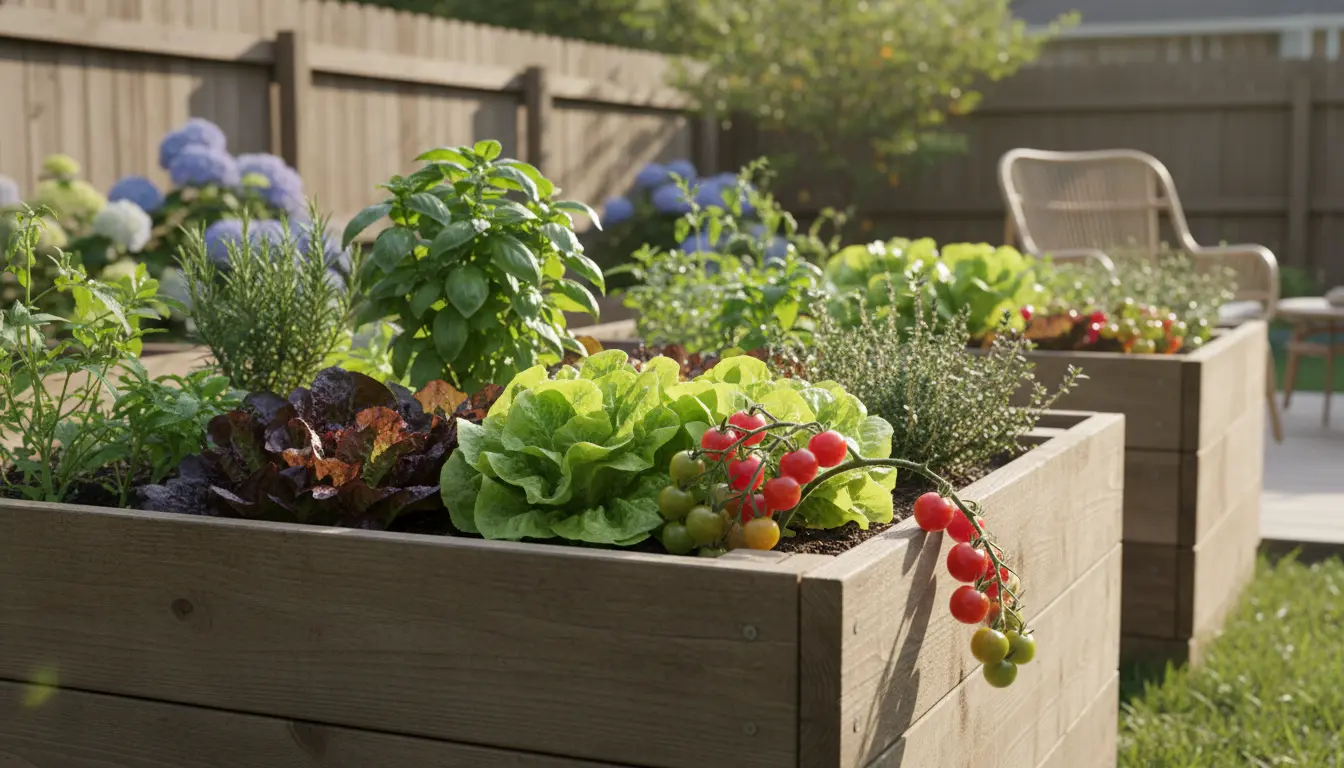
Starting a vegetable garden at home is a practical way to grow fresh food, save money, and enjoy time outdoors. This guide gives step-by-step actions you can follow whether you have a small balcony, a backyard, or a community plot.
Planning Your Vegetable Garden
Choose the Right Location for Your Vegetable Garden
Most vegetables need 6 to 8 hours of direct sun daily. Pick a spot that gets morning sun and is sheltered from strong winds.

Consider access to water, convenience for daily care, and proximity to trees that can compete for nutrients and light.
Decide What to Grow in Your Vegetable Garden
Start with easy, high-reward crops. Good beginner choices include lettuce, tomatoes, radishes, beans, and herbs.
Plan for short-, medium-, and long-season plants to keep harvests steady through spring, summer, and fall.
Many common vegetables like lettuce and radishes can be harvested within 30 days of planting from seed, giving fast results for new gardeners.
Preparing Soil for Your Vegetable Garden
Test and Improve Soil for Your Vegetable Garden
Soil quality determines success. Start with a basic pH and nutrient test available from local extension services or home kits.
Amend soil with compost and well-rotted manure to improve texture and fertility. Aim for a loamy, crumbly texture that drains but holds moisture.
Raised Beds vs In-Ground Planting for Your Vegetable Garden

Raised beds warm faster in spring and provide better drainage and control over soil quality. They are ideal for small spaces or poor native soil.
In-ground planting can be less expensive for larger areas. If choosing in-ground, remove weeds and work compost into the top 6 to 12 inches.
Planting and Care for a Vegetable Garden
Planting Tips for Your Vegetable Garden
Follow seed packet or plant tag spacing and depth instructions. Overcrowding reduces airflow and increases disease risk.
Stagger plantings for continuous harvest. For example, sow lettuce every two weeks to maintain a steady supply.
Watering, Mulching, and Fertilizing in Your Vegetable Garden
Water deeply and less frequently to encourage strong root systems. Aim for about 1 inch of water per week, adjusted for rainfall and temperature.
- Use drip irrigation or soaker hoses to reduce water loss and leaf wetness.
- Apply 2 to 3 inches of organic mulch to conserve moisture and suppress weeds.
- Use balanced organic fertilizer or compost tea during the growing season as needed.
Pest and Disease Management in Your Vegetable Garden
Preventive steps are the most effective. Rotate crops and avoid planting the same family in the same place year after year.
Use physical barriers like row covers for insects, handpick larger pests, and encourage beneficial insects by planting flowers and herbs.
Tools and Supplies for a Vegetable Garden
Keep basic tools on hand: a spade, hand trowel, pruning shears, watering can or hose with a gentle nozzle, and a soil test kit.
Buy good-quality seeds or starts, and label rows to track planting dates and varieties.
Small Real-World Example: Case Study of a 10×10 Vegetable Garden
Maria converted a 10×10 foot patch in her suburban backyard into a productive vegetable garden. She used two 4×10 raised beds and a narrow pathway between them.
Her plan included tomatoes at the back, bush beans and peppers in the middle, and succession-sown lettuce and radishes at the front. She added 4 inches of compost and used drip irrigation on a timer.
Results in the first season: continuous salad greens from May to September, three tomato harvests, and a reliable supply of green beans. Time commitment averaged 20 minutes per day during peak season.
Seasonal Calendar for Your Vegetable Garden
- Spring: Test soil, start cool-season crops, prepare beds.
- Summer: Maintain watering and harvest regularly; watch for heat stress.
- Fall: Plant fall crops, remove spent plants, add compost for winter.
Quick Checklist to Start Your Vegetable Garden
- Choose location with adequate sun and water access.
- Decide size and layout: raised beds or in-ground.
- Test and amend soil with compost.
- Select easy crops and plan succession planting.
- Set up watering, mulch, and pest control strategies.
- Record planting dates and observe regularly for issues.
Starting a vegetable garden is a learning process. Begin small, keep notes on what works in your microclimate, and expand gradually. With planning and simple care, you can enjoy fresh homegrown vegetables within the first season.