Why Home Composting Matters
Home composting turns kitchen scraps and yard waste into a valuable soil amendment. It reduces household waste and lowers greenhouse gas emissions from landfills.
Compost improves soil structure, water retention, and plant health. Learning simple home composting steps makes the process low-effort and effective.
How to Start Home Composting: Basic Overview
Pick a method, gather materials, and manage moisture and airflow. These three actions cover most issues beginners face.
Common methods include a simple heap, a compost bin, or a tumbler. Choose what fits your space and schedule.
Choosing a Compost Method for Home Composting
Select a method based on space, time, and how fast you want finished compost. Small yards often work best with a bin or tumbler.

Apartment or balcony composters can use bokashi or worm bins (vermicompost). Each method handles different materials and odor risks.
Materials: What to Compost
Successful home composting balances ‘greens’ (nitrogen) and ‘browns’ (carbon). Aim for a mix rather than only one type.
- Greens: fruit and vegetable scraps, coffee grounds, fresh grass clippings.
- Browns: dry leaves, shredded paper, cardboard, straw, wood chips.
- Avoid: meat, dairy, oily foods, diseased plants, and pet waste from carnivores.
Practical Ratio for Home Composting
A common rule is roughly 2–3 parts browns to 1 part greens by volume. This ratio keeps odors down and helps decomposition.

If the pile smells, add more browns. If it is dry and slow, add greens or water.
Step-by-Step Home Composting Instructions
Follow these steps to build and maintain a compost pile or bin at home.
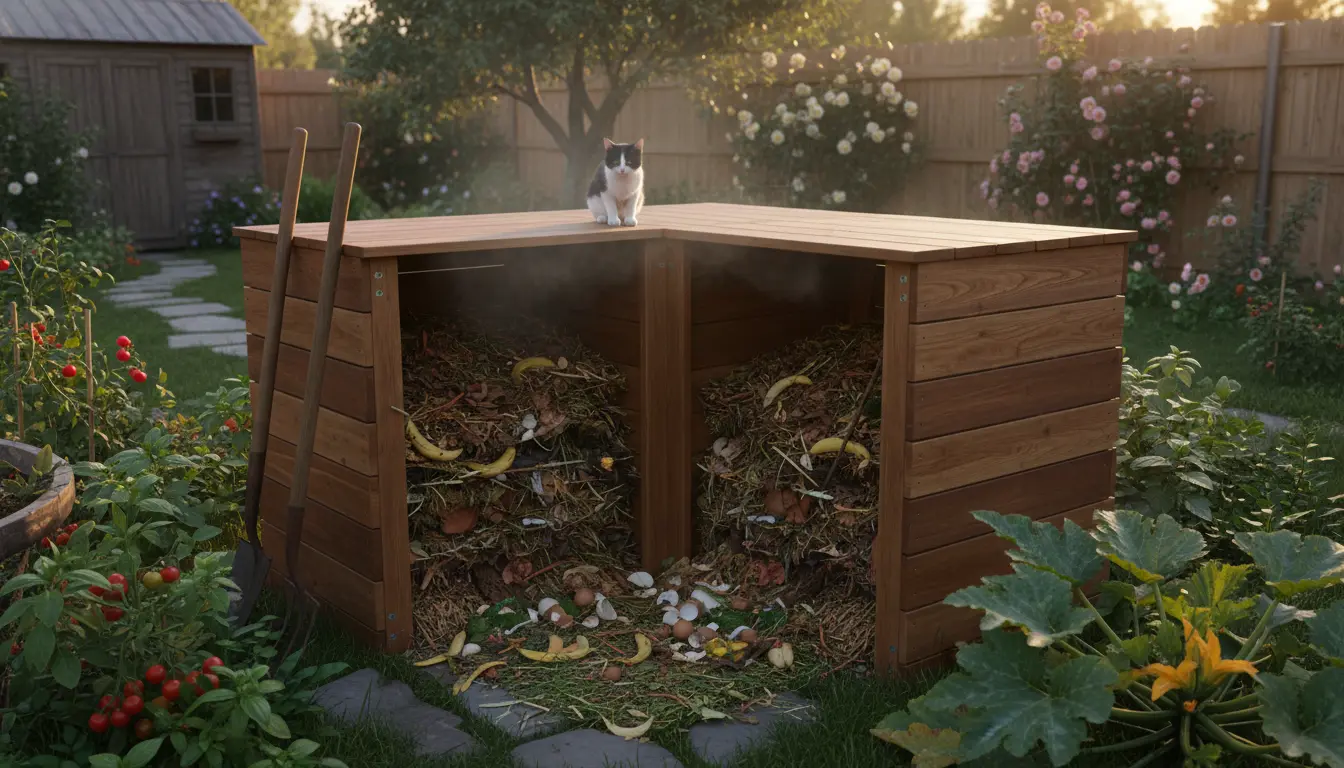
- Choose a location: a level, shaded spot near a water source works best.
- Set up a bin or area: use a commercial bin, a DIY pallet enclosure, or a tumbler.
- Add a base layer: coarse browns like small branches or straw for drainage and airflow.
- Layer materials: alternate greens and browns in 4–6 inch layers.
- Moisten: aim for a damp sponge consistency; water lightly if needed.
- Turn or aerate: weekly turning speeds up composting; passive systems turn monthly.
- Monitor: finished compost is dark, crumbly, and earthy smelling—ready in weeks to months.
Maintenance Tips for Home Composting
Simple maintenance prevents pests and speeds decomposition. Regular checks are all that’s needed for steady results.
- Turn regularly to supply oxygen and mix materials.
- Keep the pile moist but not waterlogged.
- Chop or shred larger pieces to speed breakdown.
- Cover fresh layers to reduce flies and evaporation.
Troubleshooting Common Problems in Home Composting
Smells, pests, and slow decomposition are common but solvable with small adjustments.
- Bad smell: add more browns and turn the pile to aerate.
- Too dry: sprinkle water and add greens.
- Fruit flies: bury fruit scraps deeper or cover with finished compost or browns.
- Slow breakdown: increase surface area by chopping materials and turn more often.
Composting one ton of food waste can prevent roughly 0.5 to 1 ton of CO2-equivalent emissions compared with landfilling. Home composting reduces methane emissions and returns nutrients to soil.
Small-Scale Case Study: Urban Home Composting
In a two-person apartment in Austin, Texas, a household used a 20-liter worm bin on a balcony. They added kitchen scraps and shredded office paper.
After four months, they produced rich vermicompost used in container tomatoes. Food waste to landfill dropped by 65% and plant health improved noticeably.
Using Finished Compost from Home Composting
Finished compost can be incorporated into garden beds, used as a top dressing, or mixed into potting soil. It improves nutrient balance and soil structure.
Apply a 1–2 inch layer to garden beds or mix 10–30% compost into potting mixes for containers.
Examples of Home Composting Uses
- Vegetable gardens: mix compost into planting rows.
- Lawns: top-dress with thin layers to feed grass and improve water retention.
- Potted plants: blend into potting soil for houseplants and patio containers.
Quick Checklist to Start Home Composting Today
- Choose a bin type: stationary, tumbler, worm bin, or pile.
- Collect browns and greens and a small turning tool or aerator.
- Set a routine for adding materials and checking the pile weekly.
- Use finished compost on plants and reduce trash volume.
Home composting is a practical, low-cost way to cut household waste and improve soil. With simple steps and a short routine, most households can compost successfully.